AI in Marketing: Basma’s Experience in Oman
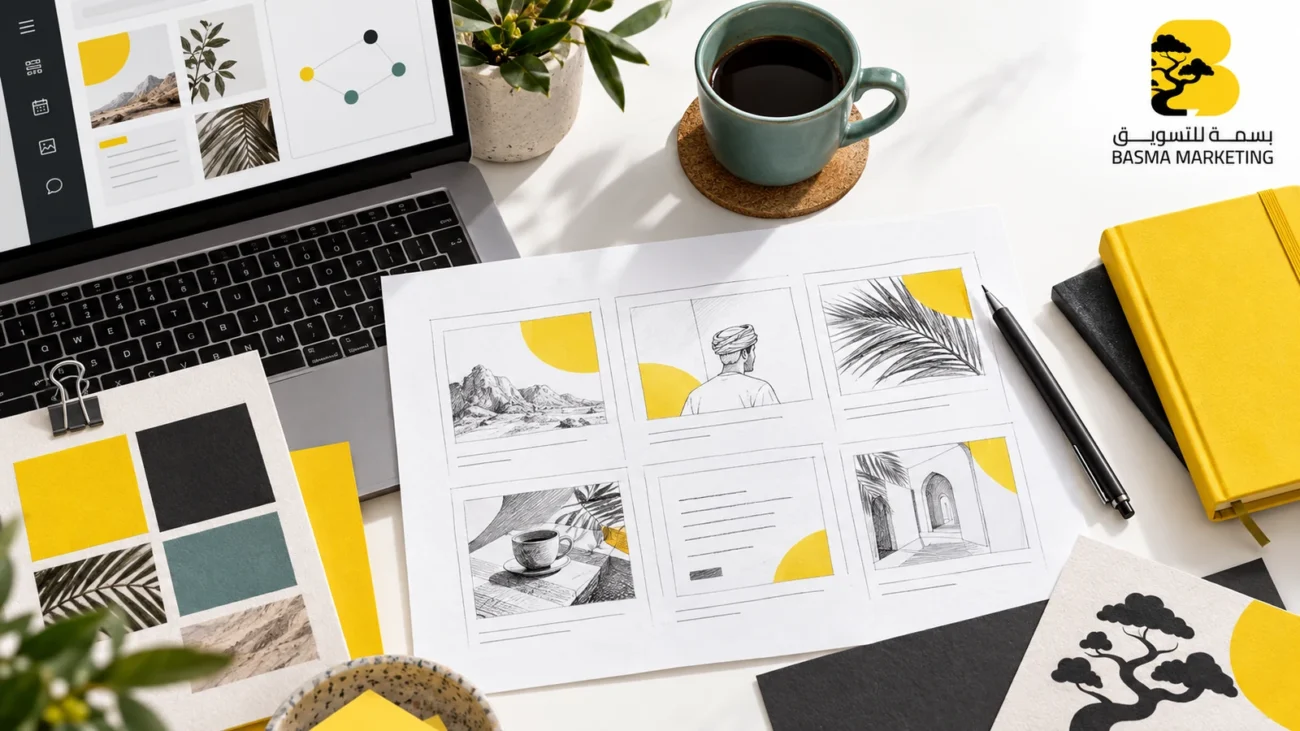
AI can help a marketing team organise ideas, prepare a content draft and explore different campaign directions. But useful work starts before the tool opens: what is the project trying to achieve, who is it for, and what makes the brand different? Basma Marketing’s experience in Oman began with specific everyday tasks, while keeping decisions and review with the team.
The takeaway: AI in marketing can support planning and content creation. It does not replace customer understanding or creative judgement. Start with one manageable task, use reliable information and review the output before publishing it under your company’s name.
Start with the problem, not the tool
In its presentation on AI adoption, Basma describes time-consuming proposal and planning work, along with the challenge of publishing marketing content consistently. Information, files and tools were also spread across separate places, making it harder to organise research and assess opportunities. The starting point was a review of the brand, content, website, data and working practices.
For businesses in Oman and the Gulf, the lesson is practical: scattered information can produce polished but inaccurate copy. Prepare a clear service description, customer questions and a brand voice before asking a tool to write.
Where Basma used AI in marketing
The presentation describes several practical uses:
- Planning and ideas: using ChatGPT to organise ideas, assist with market information analysis and prepare plans, while checking information used in decisions.
- Marketing content: developing topic ideas and first drafts, then editing them for the service, audience and brand voice.
- Visual direction: using Gemini and design tools to explore visual concepts before selecting and reviewing a direction.
- Presentations: using Claude and supporting tools to organise the structure and draft copy, followed by a review of the message, sequence and facts.
The experience also included support for Basma’s own website, from organising services and the visitor journey to preparing Arabic and English content. This is an example of internal project development, not an announcement of a separate website development or automation package.
A five-step AI-assisted campaign workflow
The presentation’s workflow can be translated into five practical steps. The product-launch example below is illustrative, not a client case study or a report of campaign results.
- Gather business and audience information. Start with accurate product details, buyer questions and a benefit you can substantiate. Do not upload confidential customer data to a tool your company has not approved.
- Assess the market and opportunities. Organise observations and recurring questions, then compare possible messages. Check the sources instead of treating an AI answer as complete market research.
- Prepare the plan and content. Give each post a clear message, an appropriate channel and a next step for the reader. Explore alternatives, then choose the one that serves the objective.
- Design, review and publish. Check the colours, typography and logo against the brand guidelines. Verify facts and image rights. Review Arabic and English separately for natural language and audience fit.
- Measure and improve. Compare preparation time, quality, interactions and actual enquiries. Keep views and clicks separate from qualified leads and sales.
Reported benefits, with clear limits
Basma describes better-organised presentations, clearer messages, more varied content and less time spent preparing drafts. These are qualitative observations from the company. The presentation does not supply numerical before-and-after measurements, so no percentage saving or sales increase is claimed here.
A unified customer database, an intelligent agent, connected communication channels and automated follow-up appear as future plans. Using a tool successfully for one task does not mean the whole business is automated.
A short checklist before you begin
- Choose a recurring task with a clear objective and deliverable.
- Prepare service information and brand guidelines, and define what must remain private.
- Assign a reviewer to check facts, language and rights before approval.
- Record time and quality before and after the trial, then expand what proves useful.
Frequently asked questions
Does AI replace a marketing team?
It can support research, organisation and drafting. Strategy, context and quality control remain human responsibilities. Its value is in helping the team do better work, not removing its judgement.
How can we keep AI-assisted content consistent with our brand?
Provide guidelines for voice, colours and typography, supported by approved examples. Compare each output with those references and check its relevance to the audience instead of accepting the first response.
Does using AI guarantee higher sales?
No. Results depend on the offer, audience, execution and follow-up. Begin with a measurable objective and track qualified enquiries, not just the volume of content produced.
Begin with a clear marketing objective
Before choosing a tool, identify what your business needs to improve: planning, content, brand identity or visual production. Explore Basma’s marketing and design services, then discuss your project with Basma to define the right scope.
Inspired by Basma Marketing’s presentation on applying AI, delivered on 16 September 2026. The practical examples in this article are not measured client-project results.
© 2026 Basma Marketing. Rights to this original article and the company logo are reserved. Tool names and trademarks belong to their respective owners.