AI in Marketing: Basma’s Experience in Oman
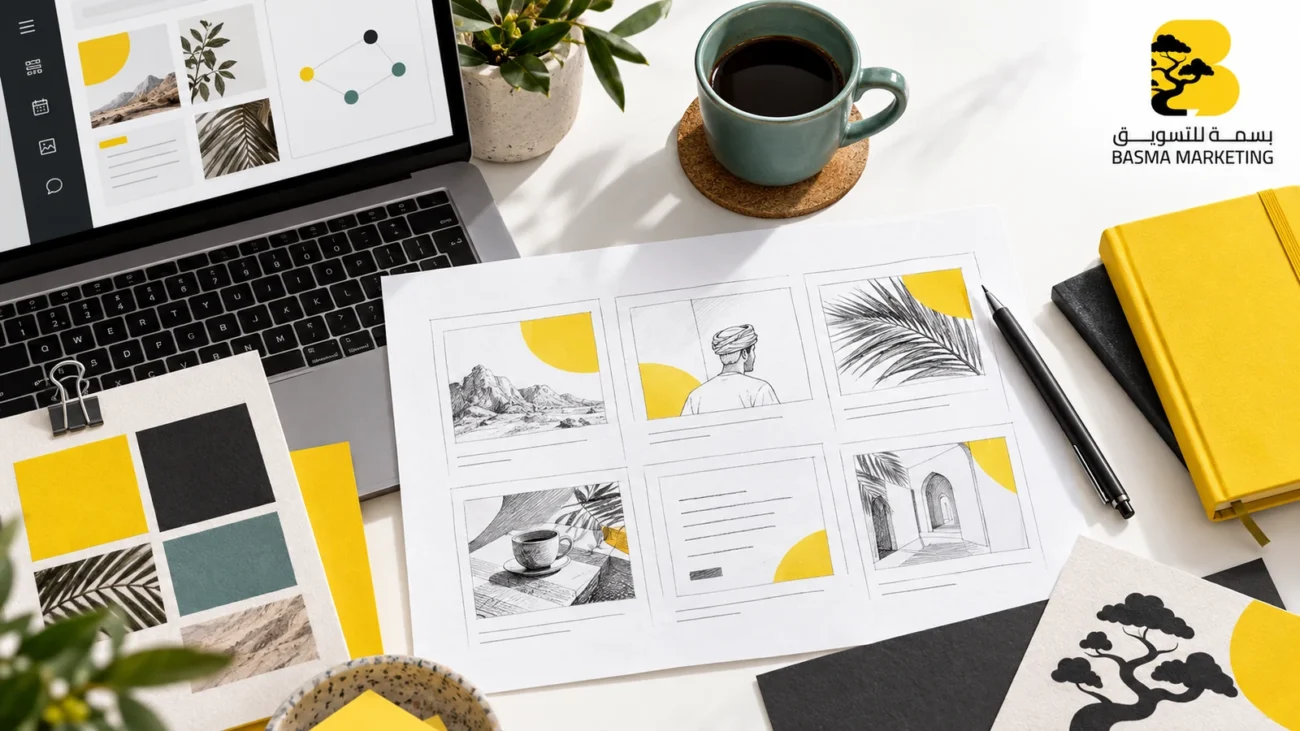
AI can help a marketing team organise ideas, draft content and explore campaign directions. Effective work begins with clear answers to three questions: what is the project’s objective, who is the audience, and what makes the brand different? Basma Marketing’s experience in Oman focused on specific day-to-day tasks, with decisions and final review remaining with the team.
The takeaway: AI in marketing can support planning and content creation. It does not replace customer understanding or creative judgement. Start with one manageable task, use reliable information and review the output before publishing it under your company’s name.
From everyday challenges to practical uses
In its presentation on AI adoption, Basma describes the time needed to prepare proposals and marketing plans, along with the challenge of publishing content consistently. Information, files and tools were spread across separate places, making research and opportunity analysis harder to organise. The team began by reviewing the brand, content, website, data and working practices to identify what needed attention.
The lesson for businesses in Oman and the Gulf is practical: when service and audience information is scattered, an AI tool may produce polished copy that does not reflect the actual offer. Prepare a clear service description, common customer questions and guidance on brand voice before asking a tool to write.
How Basma used AI in marketing
The presentation describes several practical uses:
- Planning and ideas: using ChatGPT to organise ideas, help analyse market information and prepare plans, with checks on information used to make decisions.
- Marketing content: developing topic ideas and first drafts, then editing them for the service, audience and brand voice.
- Visual direction: using Gemini and design tools to explore visual concepts before selecting and reviewing a direction.
- Presentations: using Claude and supporting tools to organise the structure and draft copy, followed by a review of the message, sequence and facts.
The experience also supported Basma’s own website, from organising its services and visitor journey to preparing Arabic and English content.
A five-step AI-assisted campaign workflow
The workflow described in the presentation can be adapted into five practical steps. The product-launch example below is illustrative; it does not report a client case study or campaign results.
- Gather business and audience information. Start with accurate product details, buyer questions and a benefit you can substantiate. Do not upload confidential customer data to a tool your company has not approved.
- Assess the market and opportunities. Organise observations and recurring questions, then compare possible messages. Check the sources instead of treating an AI answer as complete market research.
- Prepare the plan and content. Give each post one clear message, an appropriate channel and a next step for the reader. Explore alternatives, then choose the one that serves the objective.
- Design, review and publish. Check the colours, typography and logo against the brand guidelines. Verify facts and image rights. Review Arabic and English separately, rather than treating one as a literal translation of the other.
- Measure and improve. Compare preparation time, quality, interactions and actual enquiries. Keep views and clicks separate from serious enquiries and sales.
What changed, and what still needs measuring?
Basma describes improvements in presentation structure and message clarity, greater variety in content and less time spent preparing drafts. These are qualitative observations from the company. The presentation does not include numerical before-and-after measurements, so this article does not claim a specific time-saving percentage or increase in sales.
A unified customer database, an intelligent agent, connected communication channels and automated follow-up appear as future plans. Using a tool successfully for one task does not mean the whole business is automated.
A short checklist for your business
- Choose a recurring task with a clear objective and deliverable.
- Prepare service information and brand guidelines, and define what must remain private.
- Assign a reviewer to check facts, language and rights before approval.
- Record time and quality before and after the trial, then expand what proves useful.
Frequently asked questions
Does AI replace a marketing team?
It can support research, organisation and drafting. Strategy, context and quality control remain human responsibilities. Its value is in helping the team do better work, not removing its judgement.
How can we keep AI-assisted content consistent with our brand?
Provide guidelines for voice, colours and typography, supported by approved examples. Compare each output with those references and check its relevance to the audience instead of accepting the first response.
Does using AI guarantee higher sales?
No. Results depend on the offer, audience, execution and follow-up. Begin with a measurable objective and track serious enquiries, not just the volume of content produced.
Begin with a clear marketing objective
Before choosing a tool, identify what your business needs to improve: planning, content, brand identity or visual production. Explore Basma’s marketing and design services, then discuss your project with Basma to define the right scope.
Inspired by Basma Marketing’s presentation on applying AI, delivered on 16 September 2026. The practical examples in this article are not measured client-project results.
© 2026 Basma Marketing. Rights to this original article and the company logo are reserved. Tool names and trademarks belong to their respective owners.